The work
Publications
Featured discoveries
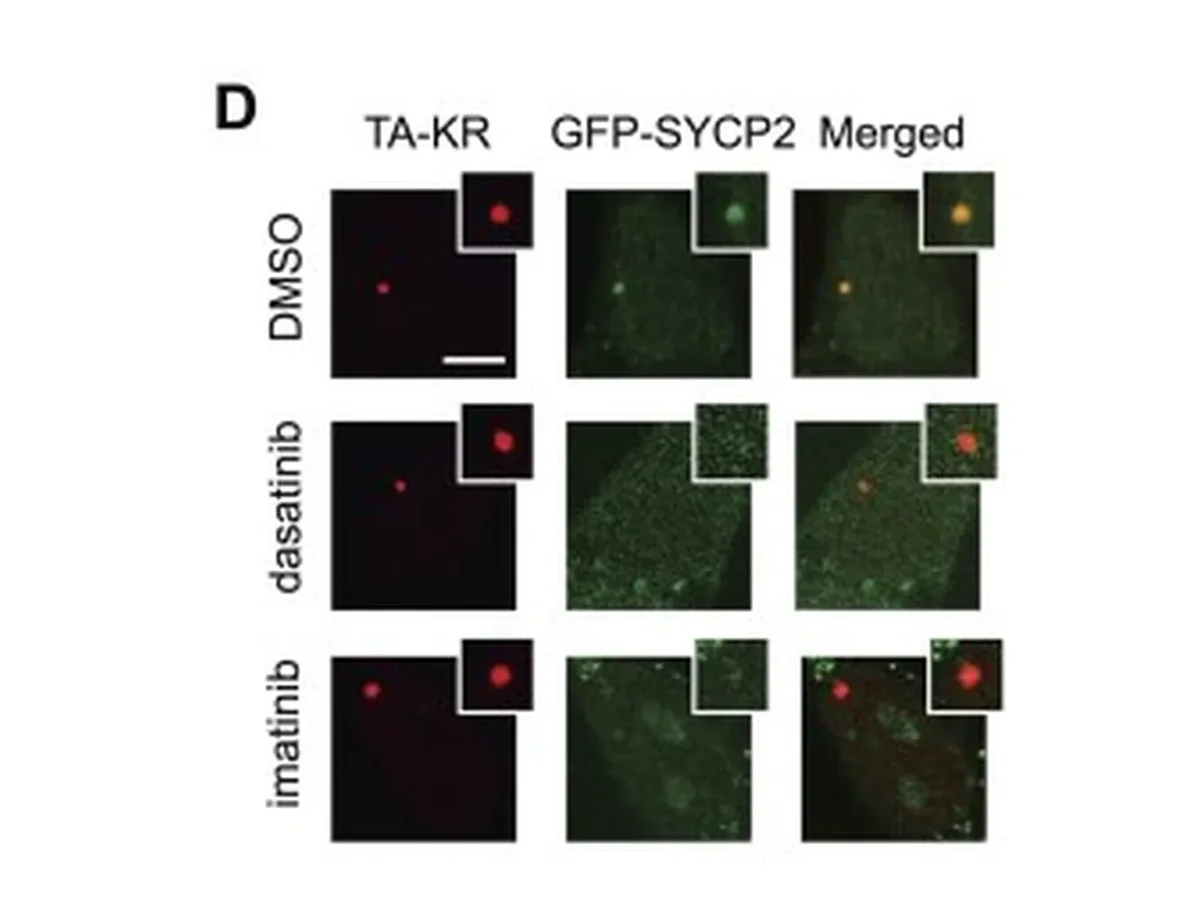
ABL1-mediated tyrosine phosphorylation of SYCP2 contributes to transcription-coupled homologous recombination and platinum resistance in ovarian cancer
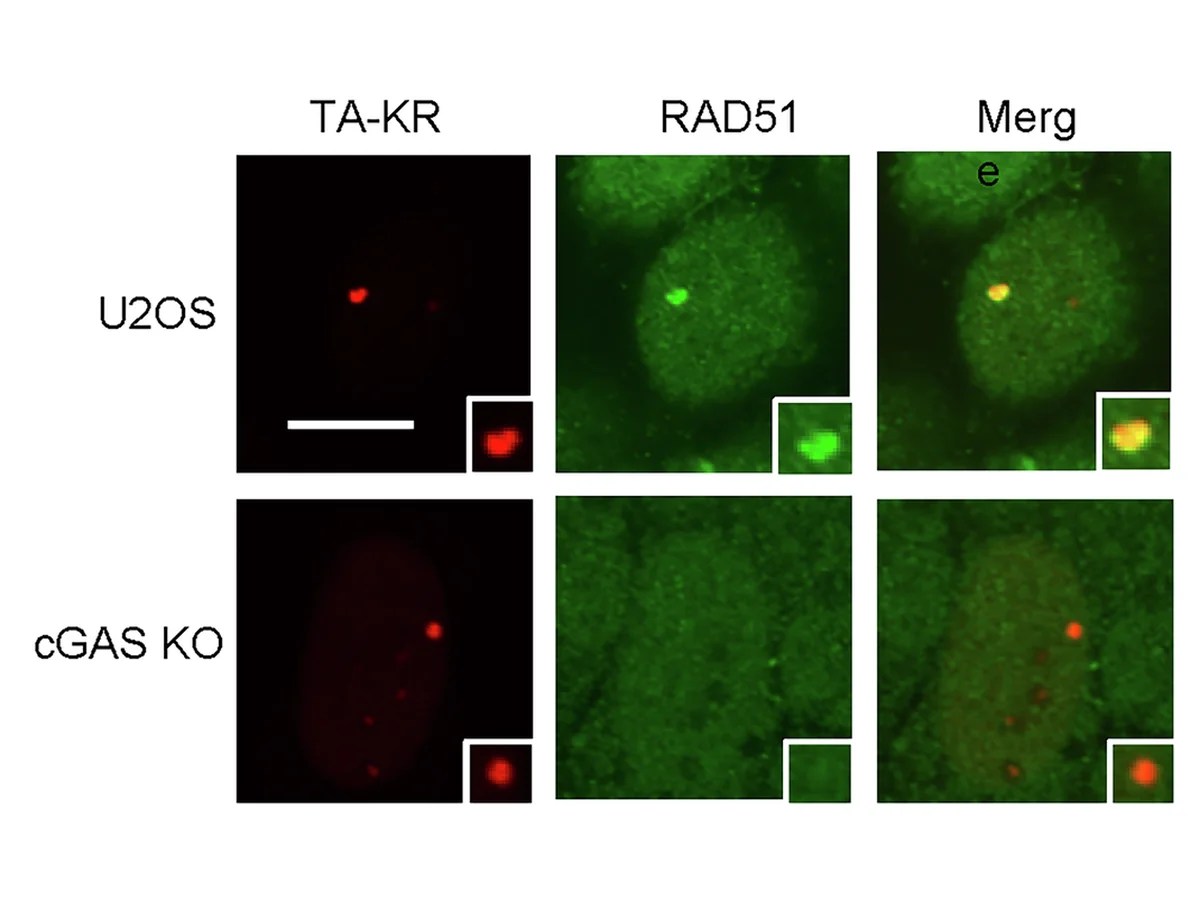
cGAS restricts PARP1-mediated microhomology-mediated end joining by suppressing poly-ADP-ribosylation
All publications
2026
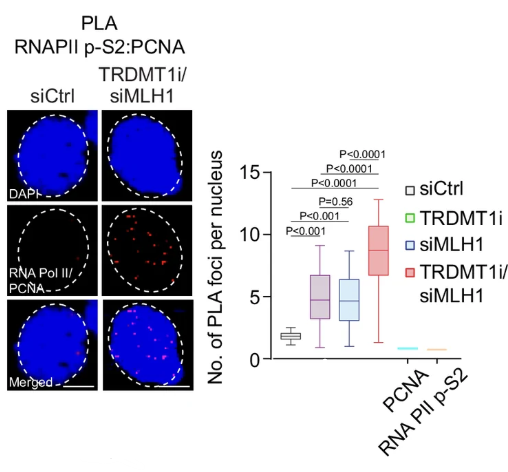
Suppression of transcription-replication conflicts by sequence-coordinated actions of TRDMT1 and MutLα
cGAS restricts PARP1-mediated microhomology-mediated end joining by suppressing poly-ADP-ribosylation
HELZ is a RNA-DNA helicase that resolves R loops to facilitate homologous recombination repair
HELZ-BRCA2 complex resolves R-loops to drive transcription-coupled homologous recombination
ABL kinase inactivation induces transcription-replication conflicts and impairs replication fork progression in metastatic small cell lung cancer
Multifaceted roles of PDS5B in RAD51-dependent homology-directed DNA repair and replication fork protection
ATM counteracts chromatin-bound cGAS during DNA replication
SonoPIN enables precise, noninvasive, and efficient intracellular delivery of PROTACs
2025
Transcription-coupled DNA repair protects genome stability upon oxidative stress-derived DNA strand breaks
ABL1-mediated tyrosine phosphorylation of SYCP2 contributes to transcription-coupled homologous recombination and platinum resistance in ovarian cancer
ZNF280A links DNA double-strand break repair to human 22q11.2 distal deletion syndrome
2024
DSS1 restrains BRCA2's engagement with dsDNA for homologous recombination, replication fork protection, and R-loop homeostasis
Meiotic protein SYCP2 confers resistance to DNA-damaging agents through R-loop-mediated DNA repair
The FANCI/FANCD2 complex links DNA damage response to R-loop regulation through SRSF1-mediated mRNA export
Revisiting Aurora Kinase B: A promising therapeutic target for cancer therapy
2023
HELZ promotes R loop resolution to facilitate DNA double-strand break repair by homologous recombination
ATR inhibition induces synthetic lethality in mismatch repair-deficient cells and augments immunotherapy
The RNA m5C modification in R-loops as an off switch of Alt-NHEJ
The DACH1 gene is frequently deleted in prostate cancer, restrains prostatic intraepithelial neoplasia, decreases DNA damage repair, and predicts therapy responses
The DACH1 gene is frequently deleted in prostate cancer, restrains prostatic intraepithelial neoplasia, decreases DNA damage repair, and predicts therapy responses
2022
Immunostaining and Protein Pull-Down of Methyl-5-Cytosine-Marked RNA:DNA Hybrids
Author Correction: Sources, resolution and physiological relevance of R-loops and RNA-DNA hybrids
Sources, resolution and physiological relevance of R-loops and RNA-DNA hybrids
FMRP promotes transcription-coupled homologous recombination via facilitating TET1-mediated m5C RNA modification demethylation
DNA repair defects in cancer and therapeutic opportunities
2021
2020
Cigarette smoke exposure enhances transforming acidic coiled-coil-containing protein 2 turnover and thereby promotes emphysema
An R-loop-initiated CSB-RAD52-POLD3 pathway suppresses ROS-induced telomeric DNA breaks
The DNA secondary structures at telomeres and genome instability
Resolution of ROS-induced G-quadruplexes and R-loops at transcriptionally active sites is dependent on BLM helicase
m(5)C modification of mRNA serves a DNA damage code to promote homologous recombination
An ordered assembly of MYH glycosylase, SIRT6 protein deacetylase, and Rad9-Rad1-Hus1 checkpoint clamp at oxidatively damaged telomeres
cGAS suppresses genomic instability as a decelerator of replication forks
2019
Localized protein biotinylation at DNA damage sites identifies ZPET, a repressor of homologous recombination
Phosphatase 1 Nuclear Targeting Subunit Mediates Recruitment and Function of Poly (ADP-Ribose) Polymerase 1 in DNA Repair
Binding of FANCI-FANCD2 Complex to RNA and R-Loops Stimulates Robust FANCD2 Monoubiquitination
Alternative Lengthening of Telomeres through Two Distinct Break-Induced Replication Pathways
2018
SIRT6 facilitates directional telomere movement upon oxidative damage
ELL2 regulates DNA non-homologous end joining (NHEJ) repair in prostate cancer cells
RAD52 is required for RNA-templated recombination repair in post-mitotic neurons
ROS-induced R loops trigger a transcription-coupled but BRCA1/2-independent homologous recombination pathway through CSB
Quantifying site-specific chromatin mechanics and DNA damage response
2017
POT1 inhibits the efficiency but promotes the fidelity of nonhomologous end joining at non-telomeric DNA regions
Cleavage of Ku80 by caspase-2 promotes non-homologous end joining-mediated DNA repair
SSRP1 Cooperates with PARP and XRCC1 to Facilitate Single-Strand DNA Break Repair by Chromatin Priming
WRN is recruited to damaged telomeres via its RQC domain and tankyrase1-mediated poly-ADP-ribosylation of TRF1
Tankyrase1-mediated poly(ADP-ribosyl)ation of TRF1 maintains cell survival after telomeric DNA damage
EAF2 regulates DNA repair through Ku70/Ku80 in the prostate
Nek7 Protects Telomeres from Oxidative DNA Damage by Phosphorylation and Stabilization of TRF1
Induction of Site-Specific Oxidative Damage at Telomeres by Killerred-Fused Shelretin Proteins
2016
The Lys63-deubiquitylating Enzyme BRCC36 Limits DNA Break Processing and Repair
2015
Interactome analysis identifies a new paralogue of XRCC4 in non-homologous end joining DNA repair pathway
Tyrosine 370 phosphorylation of ATM positively regulates DNA damage response
Differential phosphorylation of DNA-PKcs regulates the interplay between end-processing and end-ligation during nonhomologous end-joining
RAD6 promotes homologous recombination repair by activating the autophagy-mediated degradation of heterochromatin protein HP1
SIRT6 protein deacetylase interacts with MYH DNA glycosylase, APE1 endonuclease, and Rad9-Rad1-Hus1 checkpoint clamp
Interplay between arginine methylation and ubiquitylation regulates KLF4-mediated genome stability and carcinogenesis
Fast and Precise 3D Fluorophore Localization based on Gradient Fitting
Regulation of DNA Damage Signaling and Cell Death Responses by Epstein-Barr Virus Latent Membrane Protein 1 (LMP1) and LMP2A in Nasopharyngeal Carcinoma Cells
Targeted DNA damage at individual telomeres disrupts their integrity and triggers cell death
DNA damage during the G0/G1 phase triggers RNA-templated, Cockayne syndrome B-dependent homologous recombination
ARID1A Deficiency Impairs the DNA Damage Checkpoint and Sensitizes Cells to PARP Inhibitors
2014
Ubiquitin-specific protease 5 is required for the efficient repair of DNA double-strand breaks
Damage-dependent regulation of MUS81-EME1 by Fanconi anemia complementation group A protein
Novel method for site-specific induction of oxidative DNA damage reveals differences in recruitment of repair proteins to heterochromatin and euchromatin
A Chemical Probe Targets DNA 5-Formylcytosine Sites and Inhibits TDG Excision, Polymerases Bypass, and Gene Expression
HSP90 regulates DNA repair via the interaction between XRCC1 and DNA polymerase β
2013
Damage response of XRCC1 at sites of DNA single strand breaks is regulated by phosphorylation and ubiquitylation after degradation of poly(ADP-ribose)
2012
Monoubiquitinated histone H2A destabilizes photolesion-containing nucleosomes with concomitant release of UV-damaged DNA-binding protein E3 ligase
2011
2010
2008
2007
DNA single-strand break repair is impaired in aprataxin-related ataxia
RAD18 and poly(ADP-ribose) polymerase independently suppress the access of nonhomologous end joining to double-strand breaks and facilitate homologous recombination-mediated repair
A novel human AP endonuclease with conserved zinc-finger-like motifs involved in DNA strand break responses
Werner syndrome protein interacts functionally with translesion DNA polymerases
2006
2005
2004
Functional and physical interactions between ERCC1 and MSH2 complexes for resistance to cis-diamminedichloroplatinum(II) in mammalian cells
In situ analysis of repair processes for oxidative DNA damage in mammalian cells
UV light-induced DNA damage and tolerance for the survival of nucleotide excision repair-deficient human cells
2003
Spatial and temporal cellular responses to single-strand breaks in human cells
No publication matches.